
What Is Early Language Development?
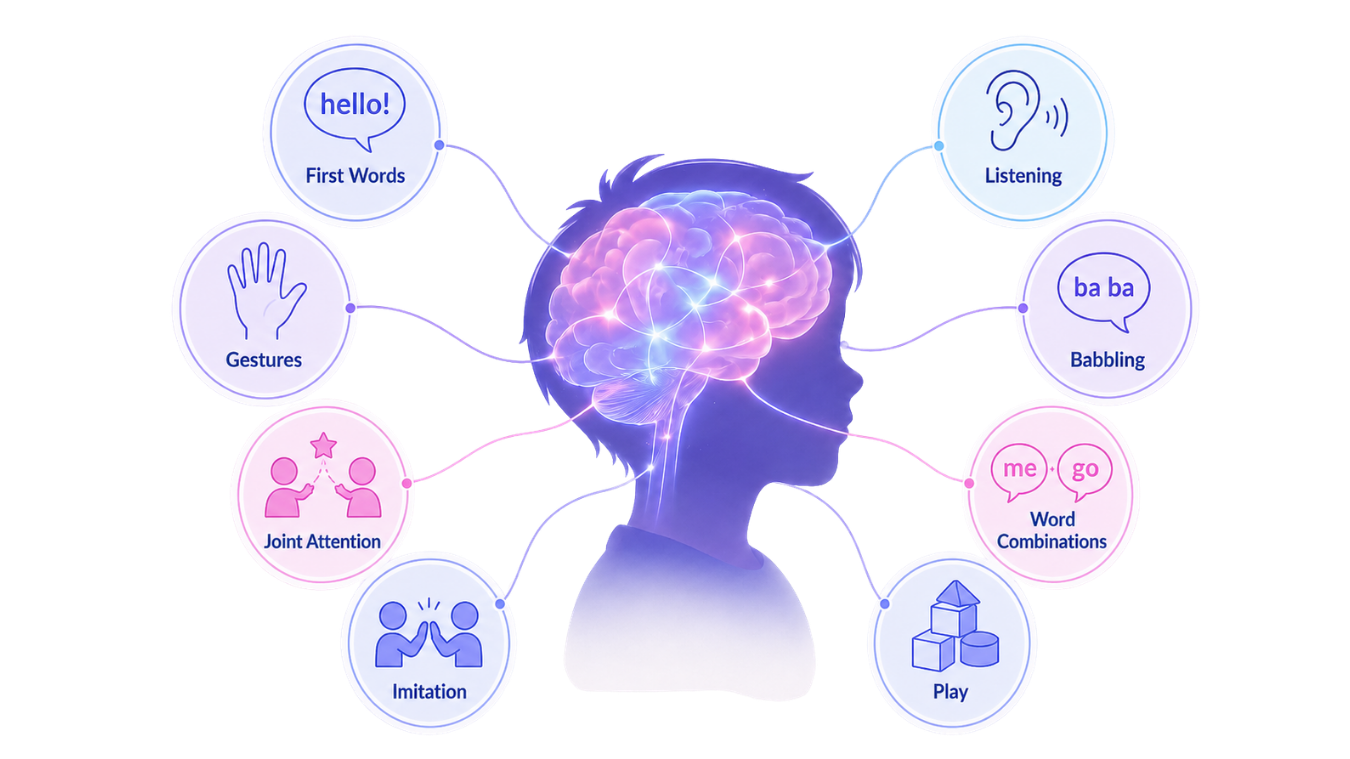
Early language development is the process children go through as they learn to understand and use communication. It includes the skills that appear before spoken words, such as listening, looking, smiling, reaching, pointing, babbling, taking turns with sounds, copying actions, and sharing attention with another person.
A child starts building early language skills when they turn toward a familiar voice, smile during a social routine, reach to be picked up, point to show something interesting, imitate a sound, or respond to a familiar word such as “bye-bye,” “milk,” or “up.”
As the child grows, early language development expands into first words, functional vocabulary, two-word combinations, short phrases, simple questions, pretend play, early stories, and conversation. These skills support later speech development, receptive language, expressive language, social communication, school readiness, and early literacy.
A child shows early language skills when they:
The first few years of life are an especially active period for speech and language development. During this time, children learn through repeated and familiar interactions with caregivers, siblings, and peers.
.png)