
AI-Powered Therapy Documentation and Caseload Management
Manage goals, session data, appointments, notes, and reports for SLPs, OTs, PTs, behavior teams, special educators, and school counselors in one workspace.
Access Beta
Student Data. In One Place.
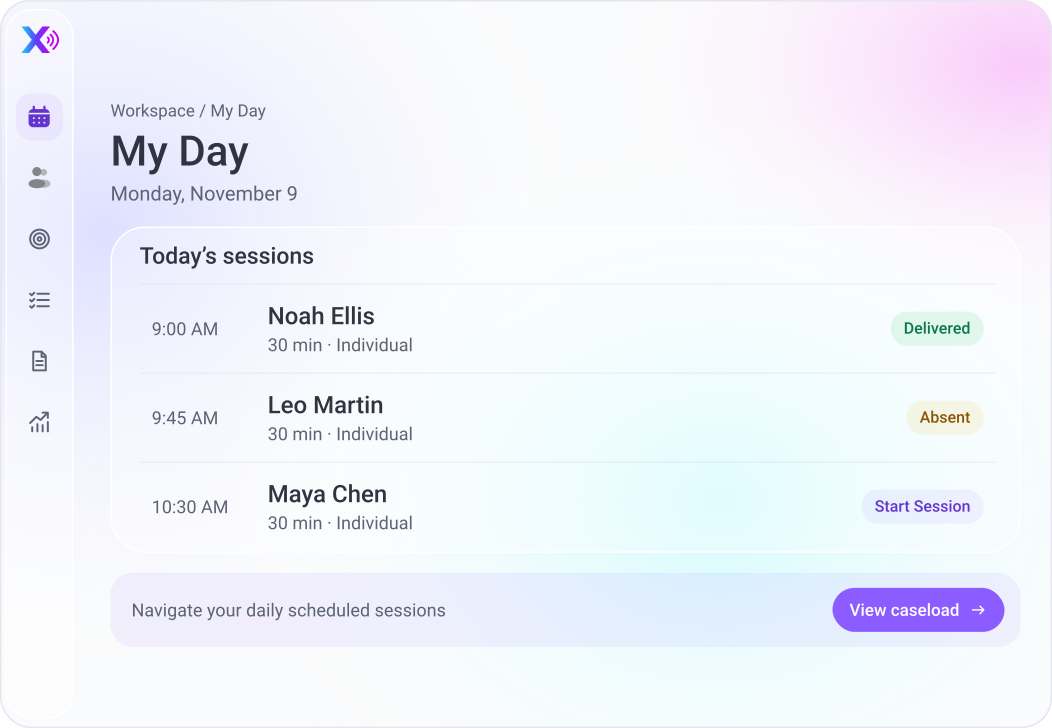
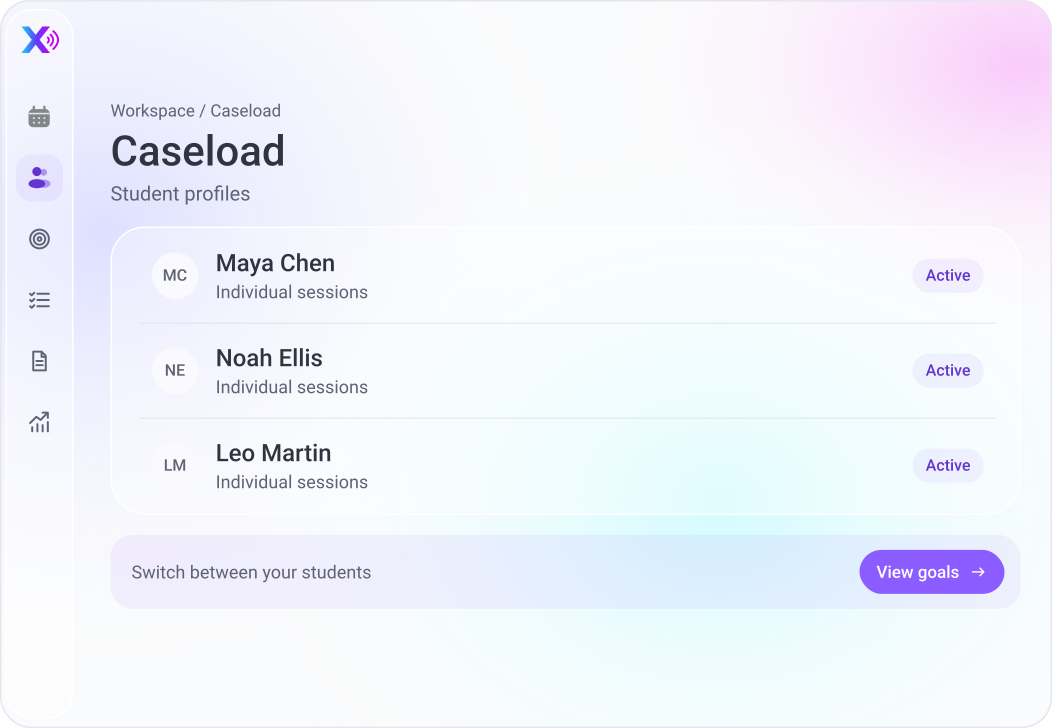
Keep student records, goal data, notes, and reports together as you plan and document your day.
Choose a workflow
Open a card to see the iSpeax demo.
Tools for your day, from scheduling to reports
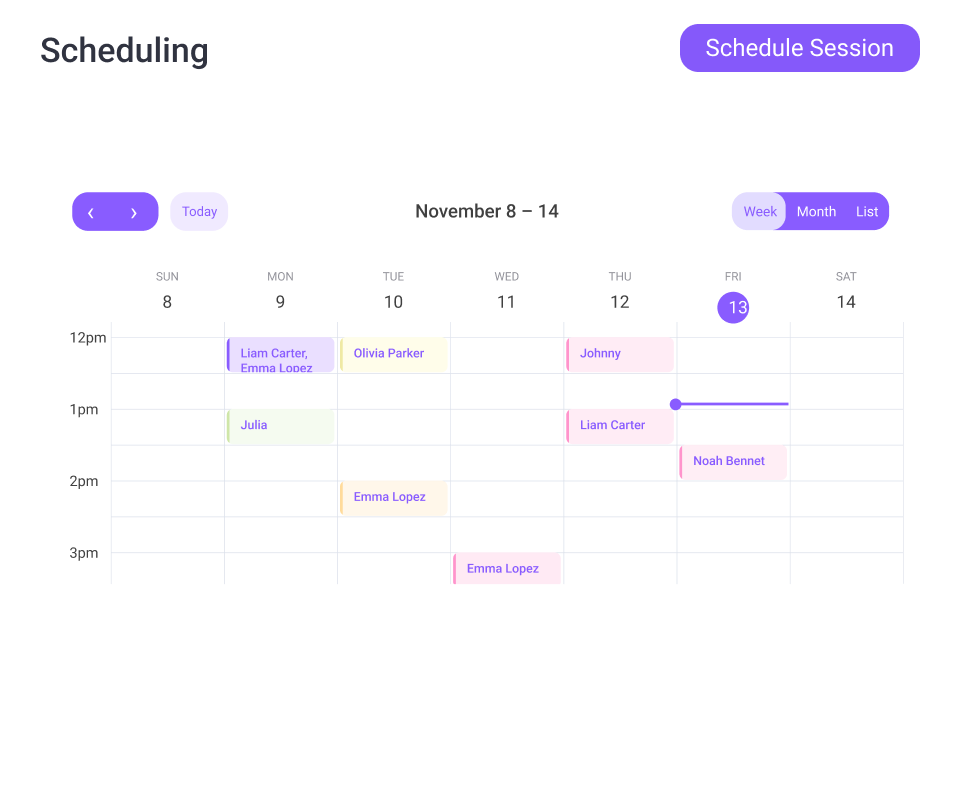
Keep client records, appointments, goals, and reports together, with session notes based on the performance you record.


Less paperwork. Better client outcomes.
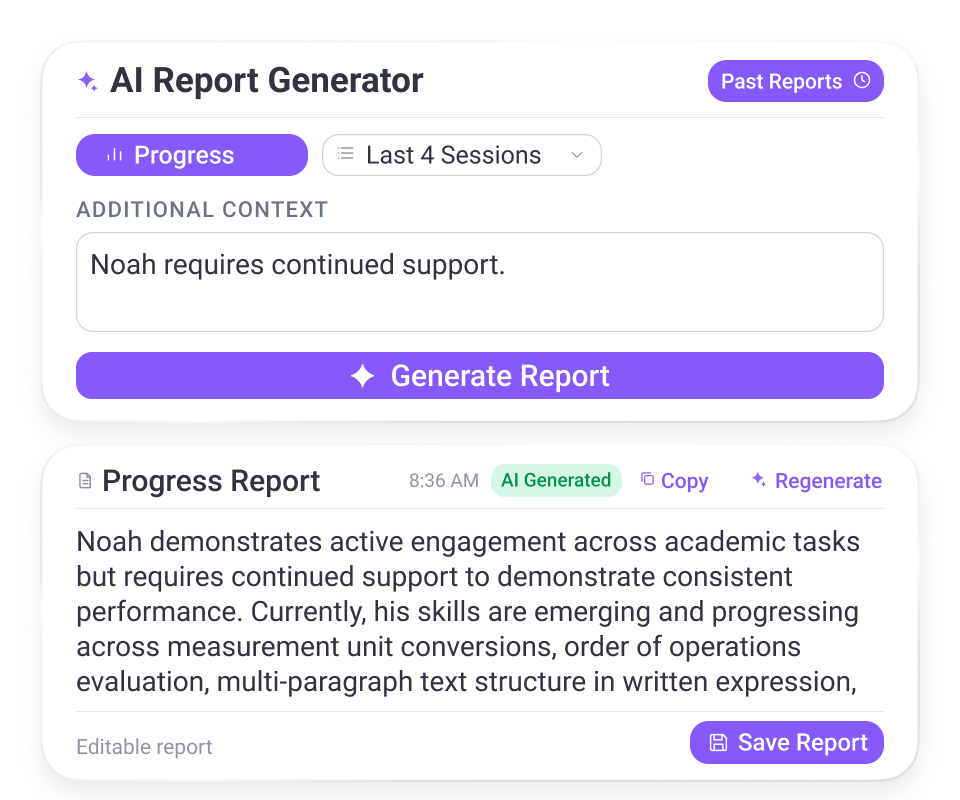
Back-to-back sessions leave little time for paperwork. Record performance as you work, draft notes for the goals you address, and prepare progress updates from the same records.
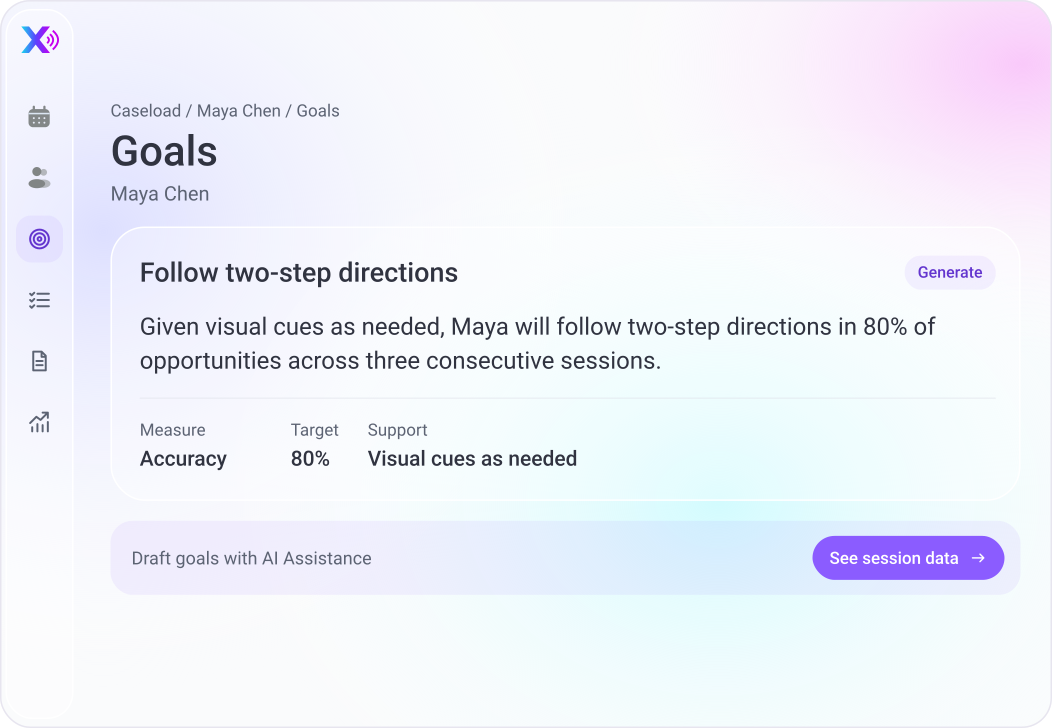
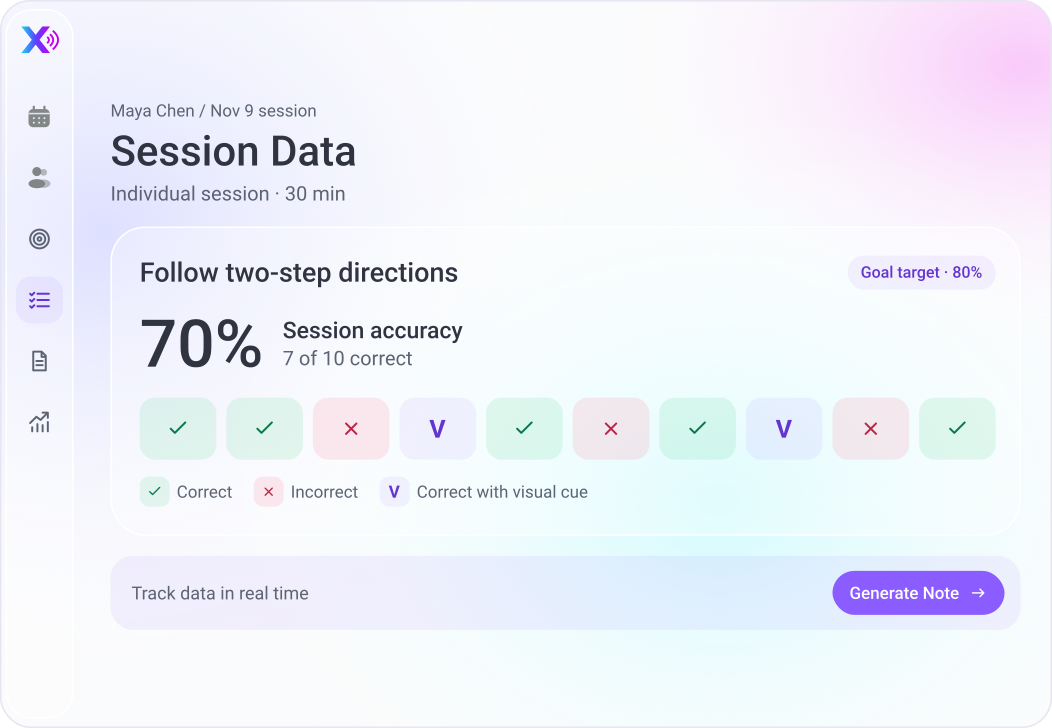
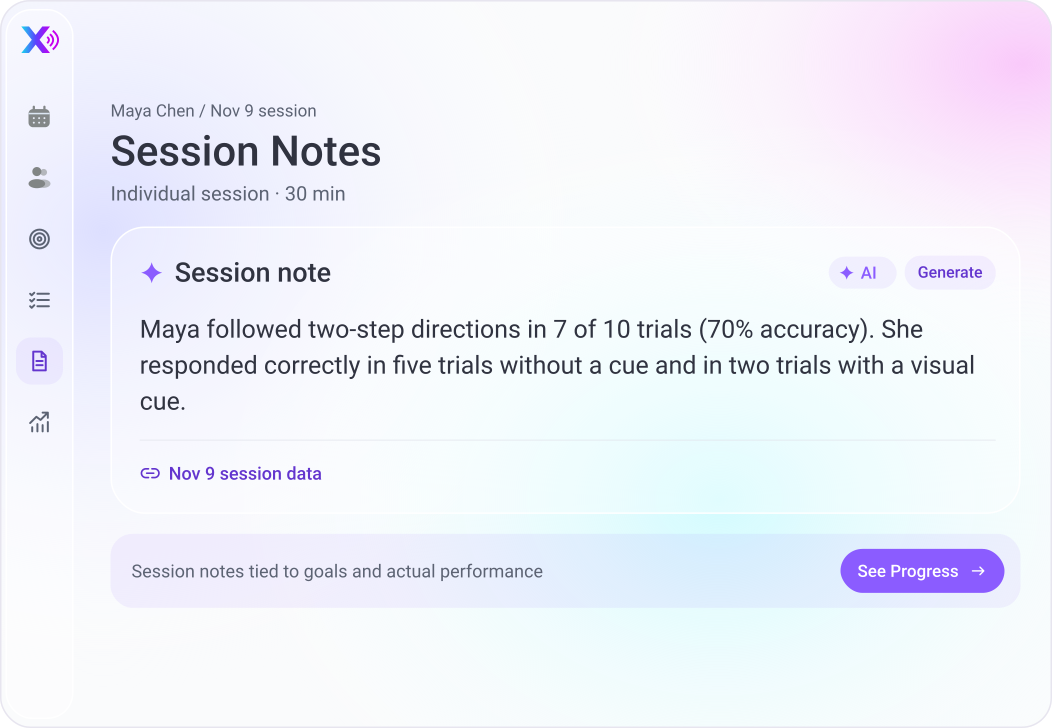
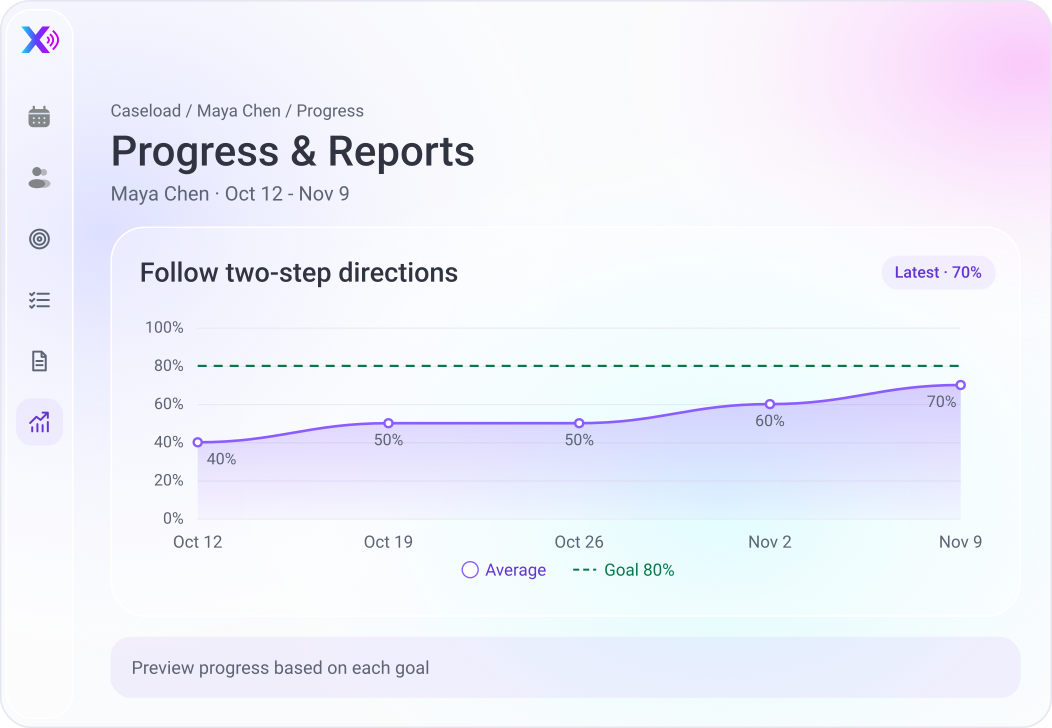
Therapy and Special Education Software for Every Discipline
Explore tools for speech therapy, ABA, occupational therapy, physical therapy, special education, and school counseling and SEL.
Keep up with notes across a full caseload
Back-to-back sessions and students working on different goals leave little time for documentation. Record speech-language responses, accuracy, prompting, and AAC use as you deliver services, with notes that reflect the goals addressed. When IEP meetings or reporting deadlines arrive, use those session records to draft progress reports and present levels in seconds, ready for your review.

Collect data as you deliver therapy
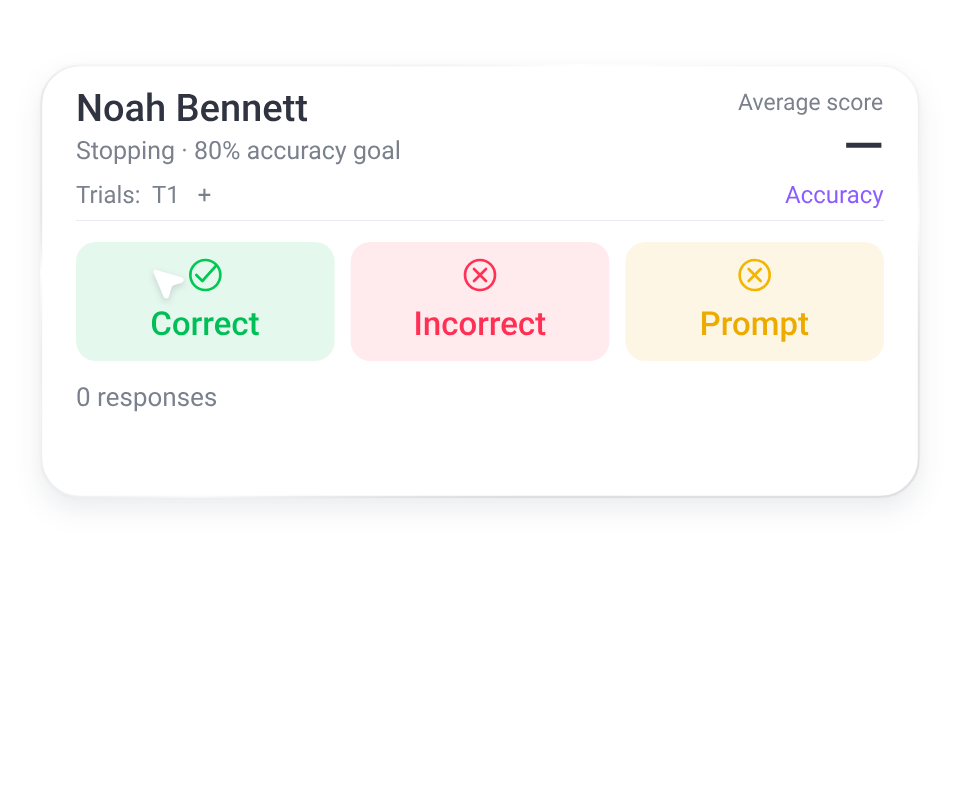
Record responses, accuracy, and prompting for each speech-language goal during individual or group sessions.

Keep session notes specific to each goal
Draft therapy notes from the goals addressed and the performance you recorded, including the cues and supports provided.

Prepare IEP updates in seconds
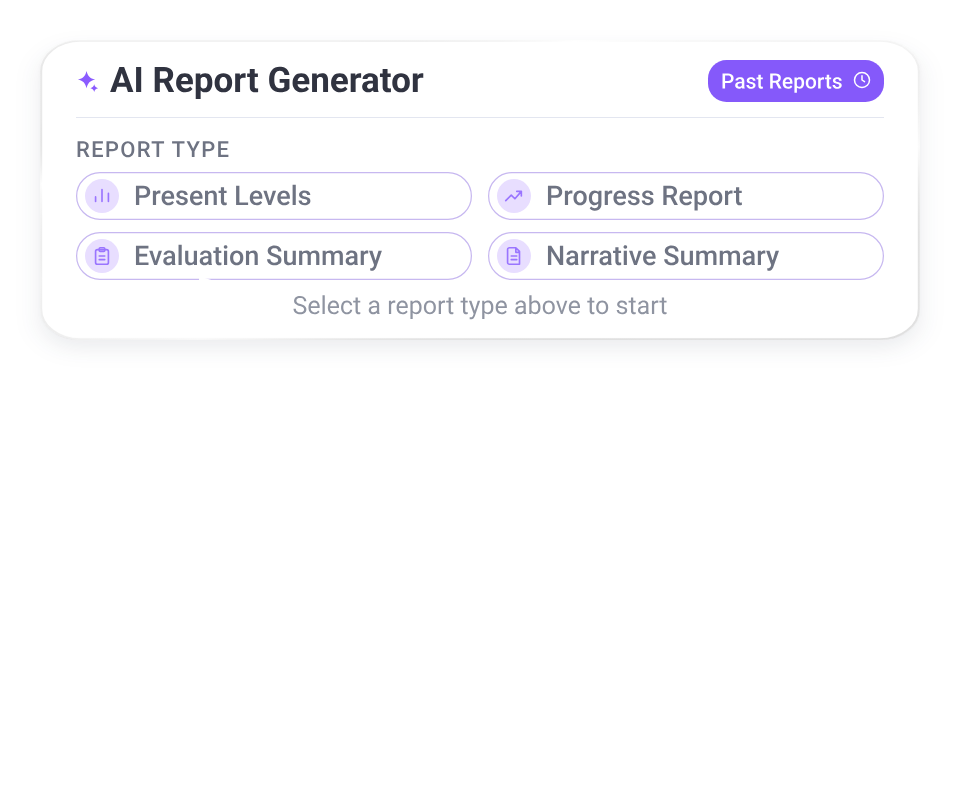
Use recorded session performance to draft progress reports and present levels for your review before meetings.
Spend less time organizing session data
Recording trials, tracking prompts, and preparing notes can take time away from reviewing how a learner is responding. Keep each target’s responses, supports, and session notes together as services are delivered. Review goal-specific charts before supervision or team discussions, then draft reports from the performance you recorded so you can spend more time deciding what to continue or adjust.
Record trials and prompts in real time
Capture responses and prompt levels for each target during sessions, with performance scores calculated from the data you enter.

See which targets need another look
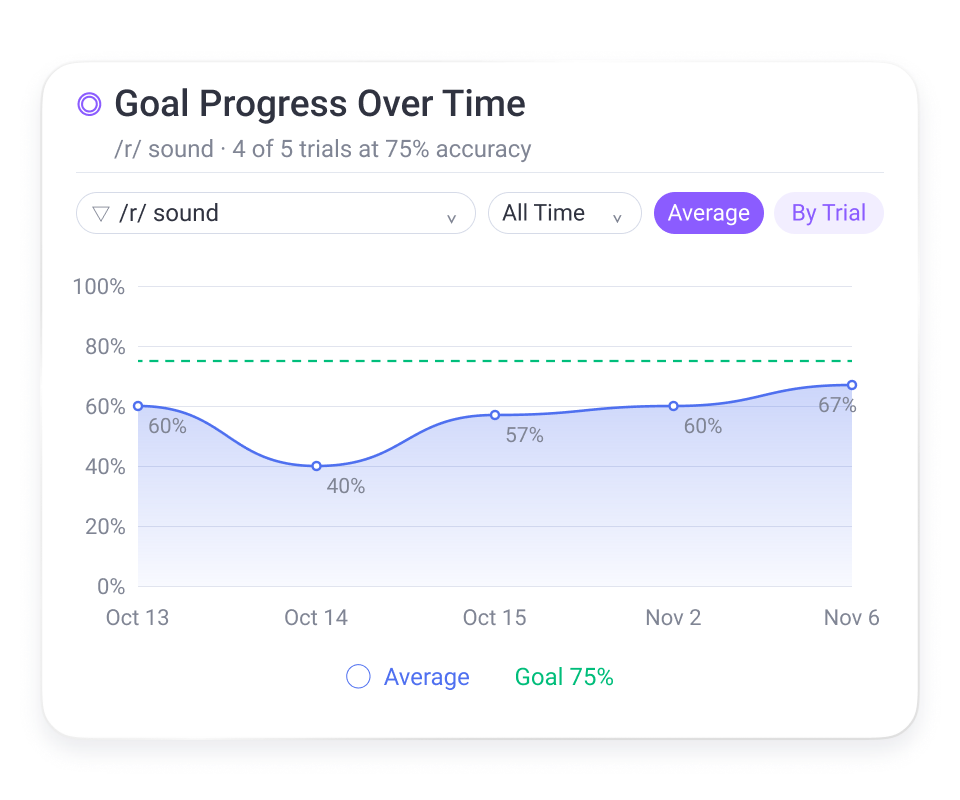
Review goal-specific charts across sessions to spot progress, variable performance, or targets that need closer review.
Make session records easier to review
Draft notes from recorded targets, responses, and supports so you can review what happened before supervision or team discussions.
Show everyday progress with less paperwork
OT progress often shows up in small changes: completing a classroom task with fewer cues, managing a self-care routine, or using a strategy more independently. Keep measurable goals for fine-motor skills, sensory needs, feeding, daily activities, and executive functioning with the performance and assistance you record. Use those session details to draft notes and reports that describe how participation is changing.

Write goals for everyday participation
Build measurable goals around classroom tasks, self-care, and daily routines, with criteria that reflect each learner’s needs.

Show the support a student needs
Record task performance, cueing, and assistance for each goal so your notes describe what the student did and how.
Spend less time preparing OT reports
Turn your session data into progress reports and present levels that describe changes in independence and participation.
Document movement without doubling the work
School PT involves more than recording which activities a student practiced. You also need to describe how they moved, the assistance or equipment used, and what that means for getting around and taking part in the school day. Record mobility, gait, balance, strength, and endurance goals during services, then use those results to draft notes and progress reports without rewriting the same details.
Keep mobility goals measurable
Set targets for movement, transitions, and access to school activities, with performance criteria you can track during services.
Capture assistance and equipment used
Document each student’s performance, physical assistance, cues, and equipment use for the goals addressed during the session.
Describe functional progress more quickly
Draft reports from recorded sessions to show changes in mobility, participation, and the support the student still needs.
Keep teaching and IEP paperwork manageable
Teaching students with different learning needs while tracking individual IEP goals can make paperwork stretch beyond the school day. Record performance during reading, writing, math, and school routines, including the prompts and supports each student needs. Keep that information with their goals, then draft progress reports and present levels from the work you have already documented for family updates and IEP meetings.
Track IEP goals while you teach
Record accuracy, opportunities, and prompts during instruction, keeping each student’s reading, writing, math, or functional goal data together.
Build goals from current needs
Use the goal builder to set measurable targets with criteria and supports that reflect each student’s present performance.

Prepare progress updates without rewriting
Draft IEP progress reports and present levels from recorded performance, then review them for family updates and team meetings.
Spend more time supporting students
Moving between individual sessions, small groups, and classroom support can leave documentation until the end of the day. Record the goals addressed, skills practiced, student responses, and support provided as you work on coping, emotional regulation, and social problem-solving. Review how those skills develop over time and draft progress updates from your records, so preparing for the next student takes less of your day.
Make SEL goals observable
Set measurable targets for coping strategies, emotional regulation, and social problem-solving, based on each student’s needs.
Document sessions between student visits
Record the skills practiced, student responses, and support provided for each goal during individual or small-group sessions.
Show progress beyond attendance
Review goal performance over time and draft updates that describe skill use, progress, and ongoing support needs.
Security Built for HIPAA and FERPA
Protect sensitive clinical and educational information with role-based access, encryption, multi-factor authentication, audit logs, and documented security safeguards.
One Workflow From Goals to Reports
Create measurable goals, schedule services, collect session data, draft notes, monitor progress, and generate reports from one connected workspace.

One Platform. Every Client. Every Step.
Keep appointments, client records, goals, and reports organized. Use the information you record each day to prepare notes and updates with less work after sessions.