
IEP Progress Monitoring Software for Special Education Teachers
Spend less time on special education documentation. Track student performance on IEP goals during instruction, record the support provided, and generate progress reports in seconds using the data collected during lessons.
Access Beta
Your special education tools, in one place
Manage student records, instructional schedules, individualized goals, and progress reporting in one place, with less time spent maintaining separate trackers for every learner.


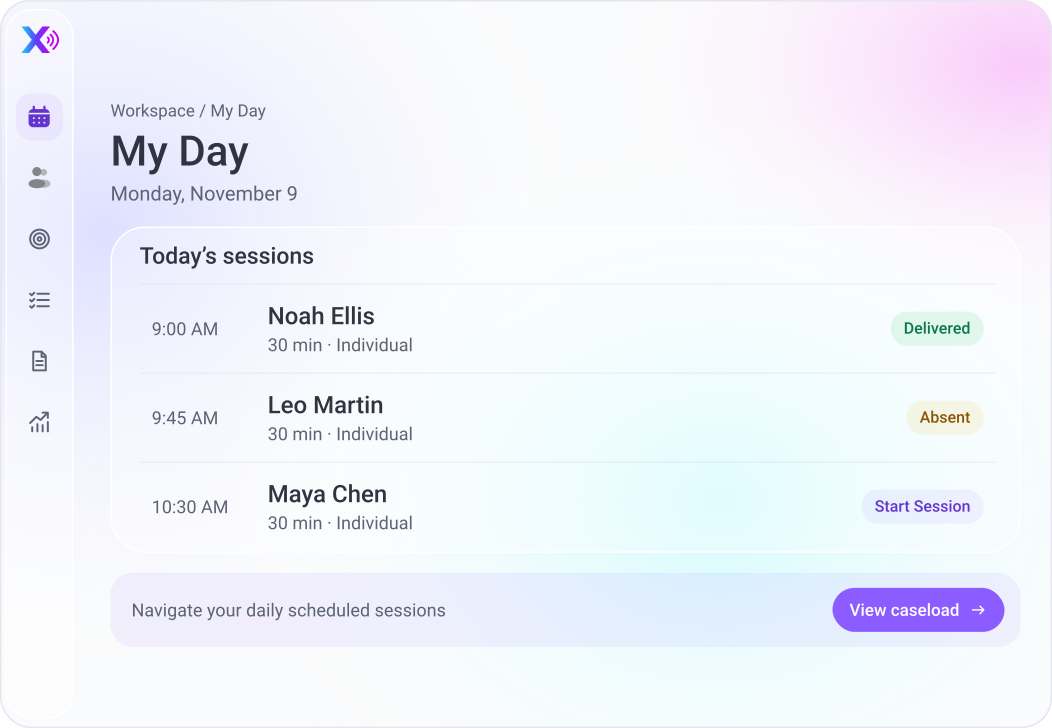
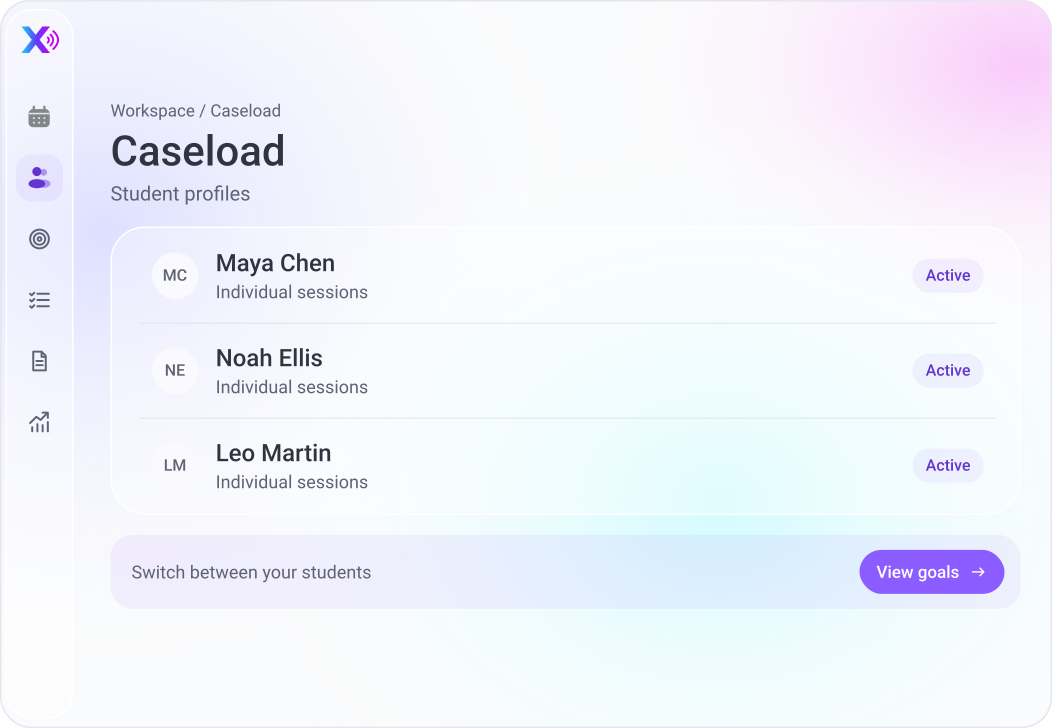
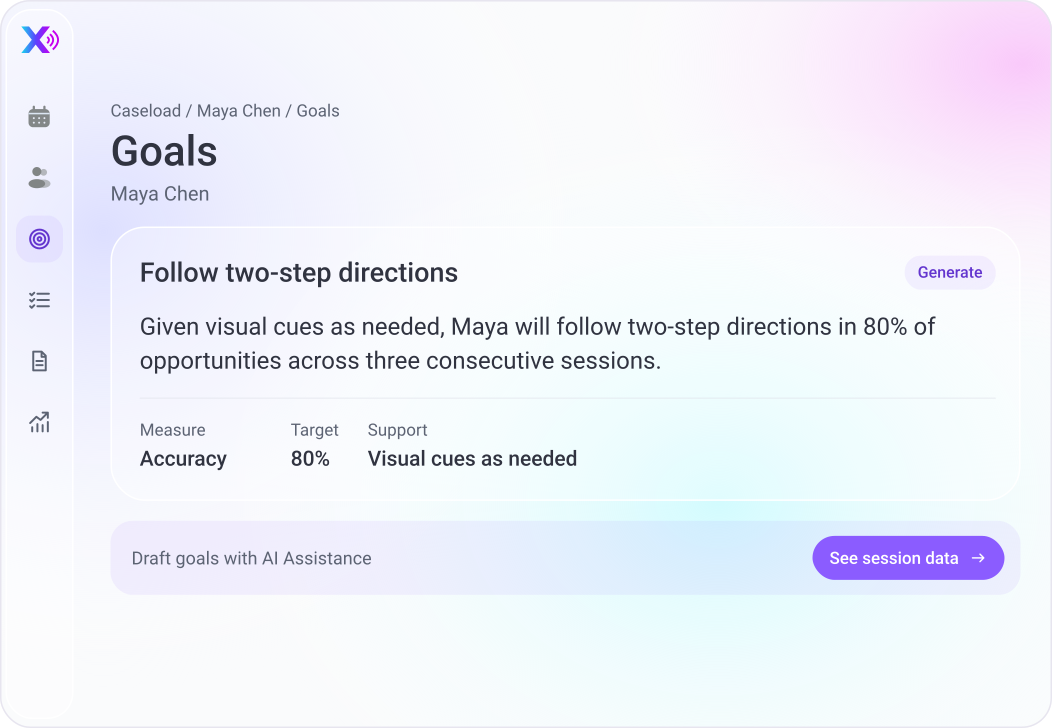
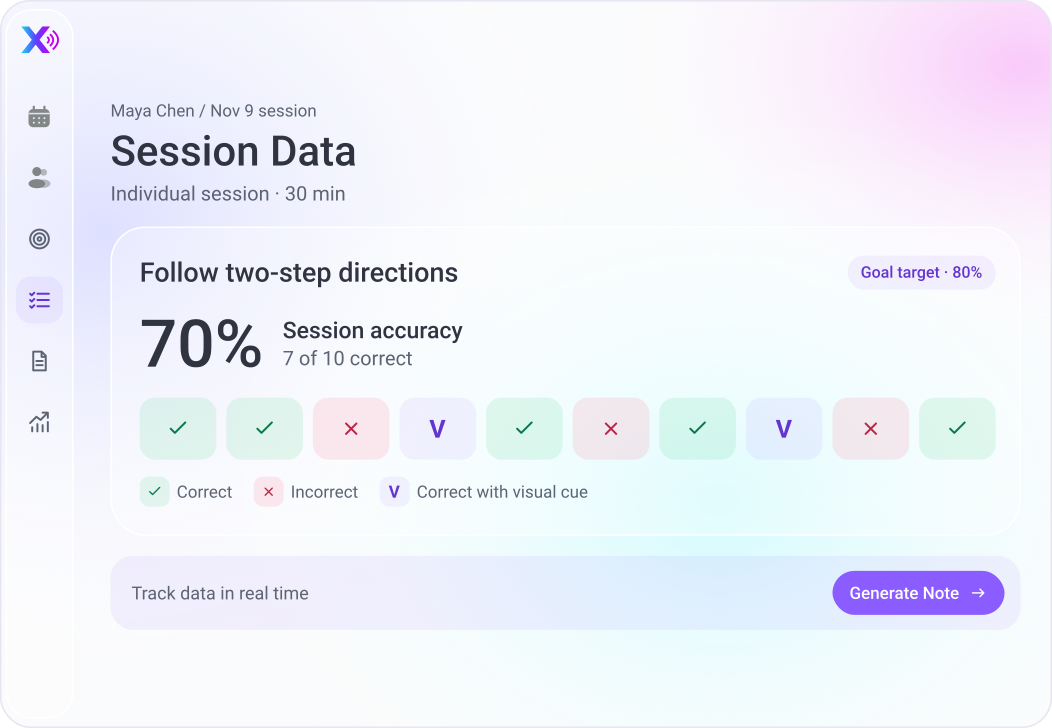
For special education teachers across school settings
Keep student goals, instructional data, notes, and IEP progress reports in one place, wherever you teach.
Spend less time documenting online instruction
Teaching online while tracking individual IEP goals can divide your attention. Record responses, accuracy, and prompts during instruction, then use the documented work to prepare progress updates and plan the next lesson.

Measurable, individualized goals
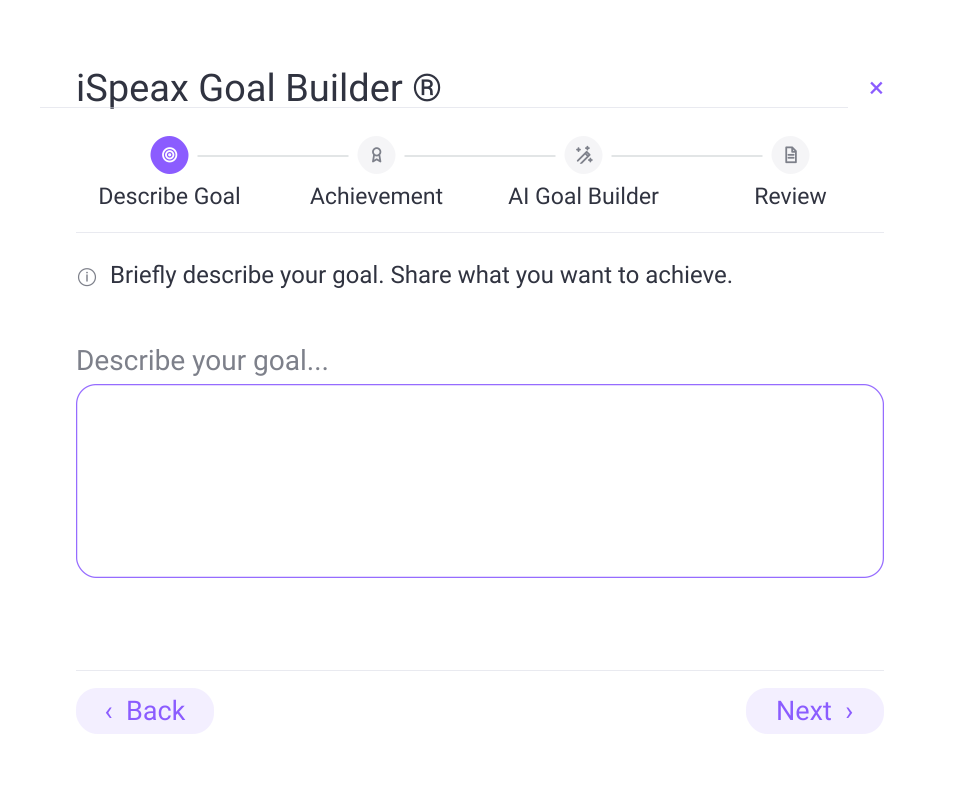
Use the goal bank to write academic and functional goals based on assessment findings and current performance.

Instructional notes for each goal
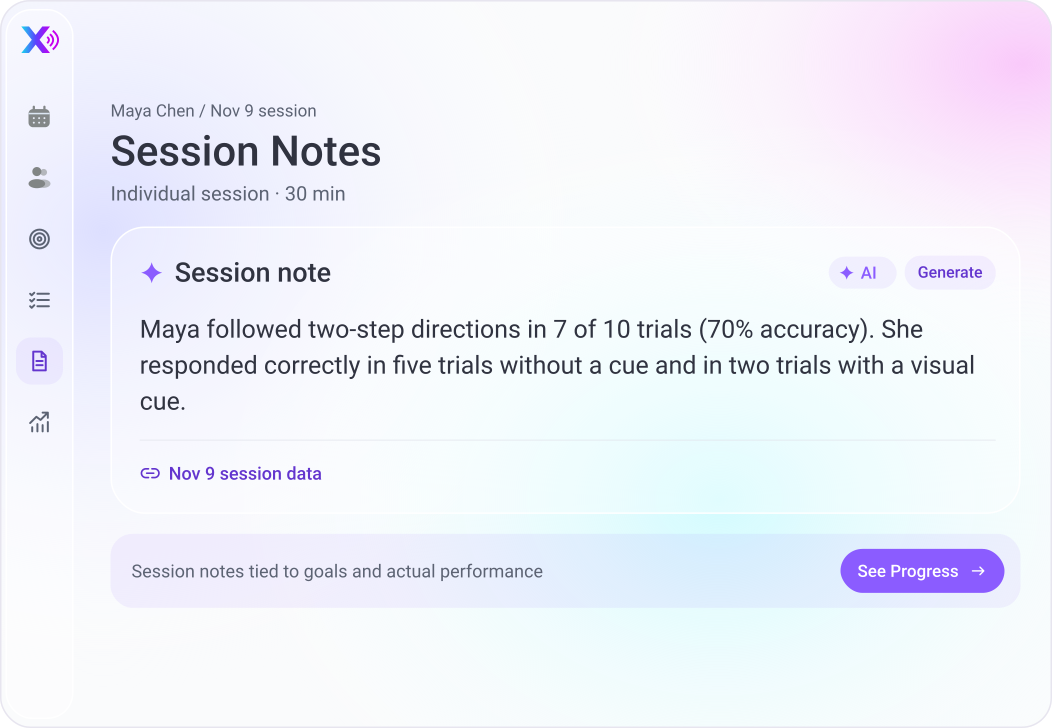
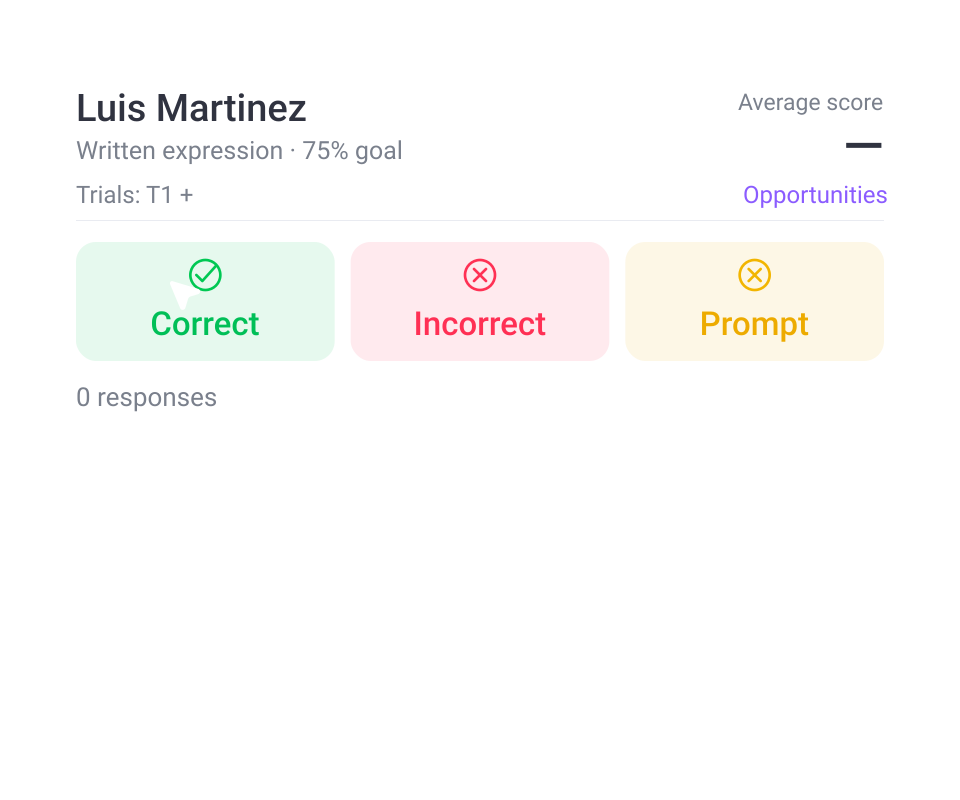
Document student responses, accuracy, accommodations, and the prompts needed during learning activities.

IEP reports based on student performance
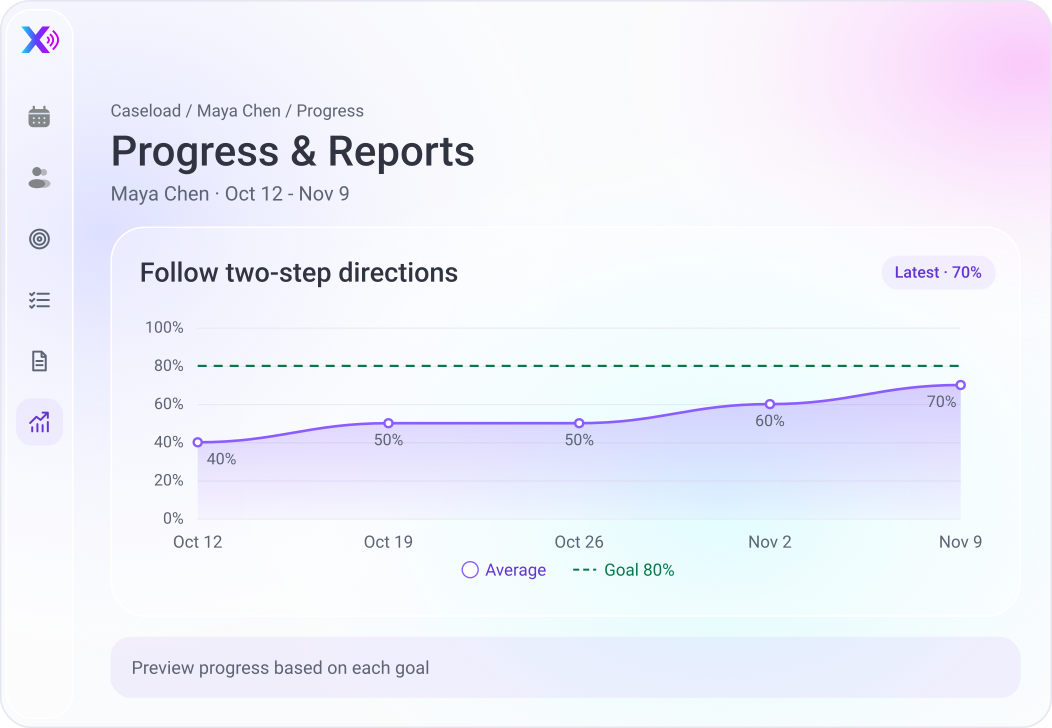
Generate progress reports from recorded instructional data to support team discussions and decisions about next steps.
Keep classroom records ready for progress updates
Classroom instruction, targeted support, and team coordination all need your attention. Keep the work completed, responses, and accommodations with each goal so you can prepare family updates without rebuilding the record after school.

Goals for individualized instruction
Write measurable academic and functional targets based on the student’s current performance.
Classroom work recorded by goal
Document responses, accuracy, accommodations, and prompts during targeted instruction.

Updates for families and school teams
Use instructional records to explain progress and the support needed for the next learning step.
Make more time for individualized learning
Individualized lessons change with a learner’s needs. Record performance on academic and functional goals, including what the learner completes independently. Use those results to plan instruction and discuss practice priorities with families.

Targets for the learner’s priorities
Build measurable goals around assessment findings, daily learning, and family priorities.

A record of independence and support
Note what the learner completed independently and when modeling, prompts, or accommodations were needed.
Progress to guide upcoming lessons
Review documented performance to plan instruction and discuss practice with families.
Make IEP progress reporting part of your teaching day
Different IEP goals across a classroom can make reporting take hours. Record accuracy, opportunities, and prompting during lessons, then draft progress reports and present levels from the work and support you have documented.
IEP goal data collected during lessons
Record accuracy, opportunities, and support levels as you teach the goals on each student’s IEP.
Notes about the supports that helped
Keep accommodations, prompts, and observations with the student’s work and goals.
Reports grounded in classroom performance
Draft progress reports and present levels from instructional records for your review before meetings.
Student Data. In One Place.
Build measurable academic and functional goals based on assessment findings and current skills. Collect data during instruction, then use it to draft present levels that describe student strengths, learning needs, and the support required.
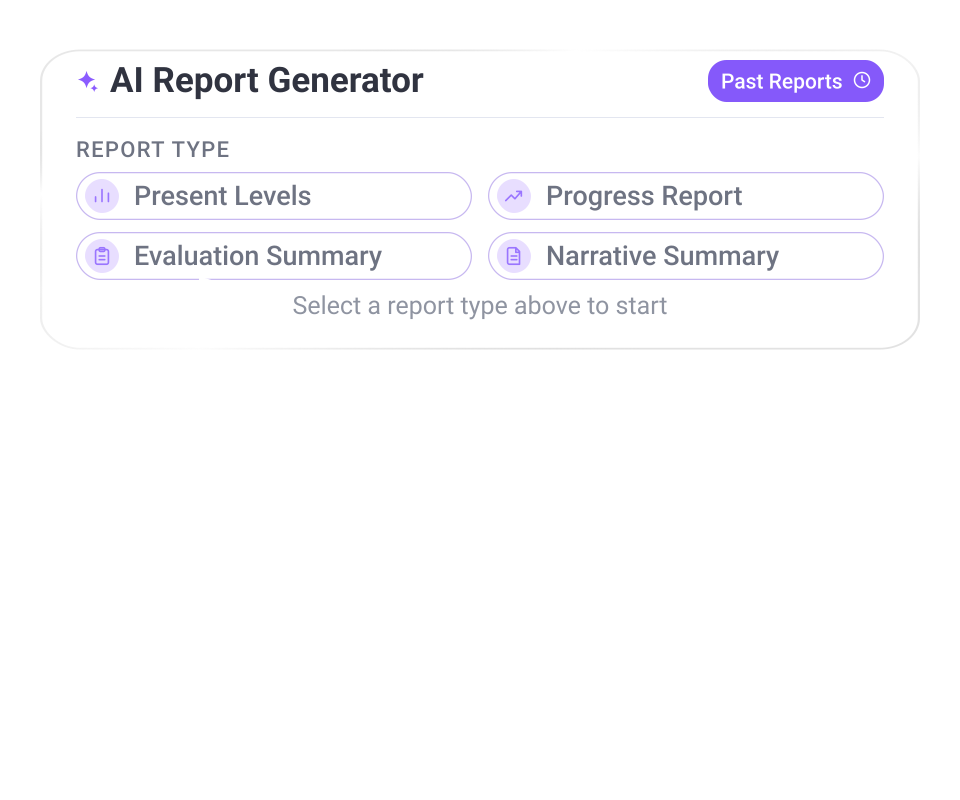
Choose a workflow
Open a card to see the iSpeax demo.
One Workflow From Goals to Reports
Create measurable goals, schedule services, collect session data, draft notes, monitor progress, and generate reports from one connected workspace.

Less paperwork. More time to teach.
Keep student records, schedules, IEP goals, instructional notes, and progress reports in one place, so paperwork takes less of your teaching day.